CONTAINING
Why the pot matters
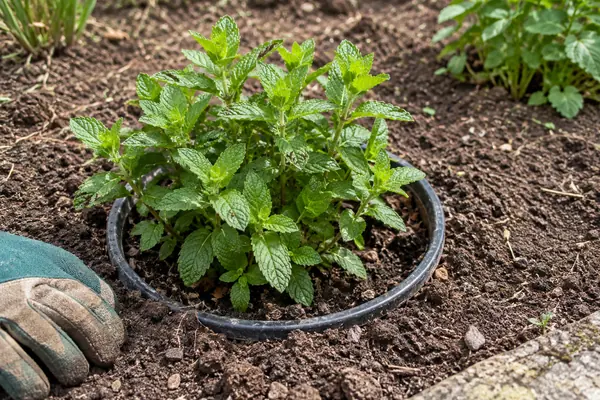
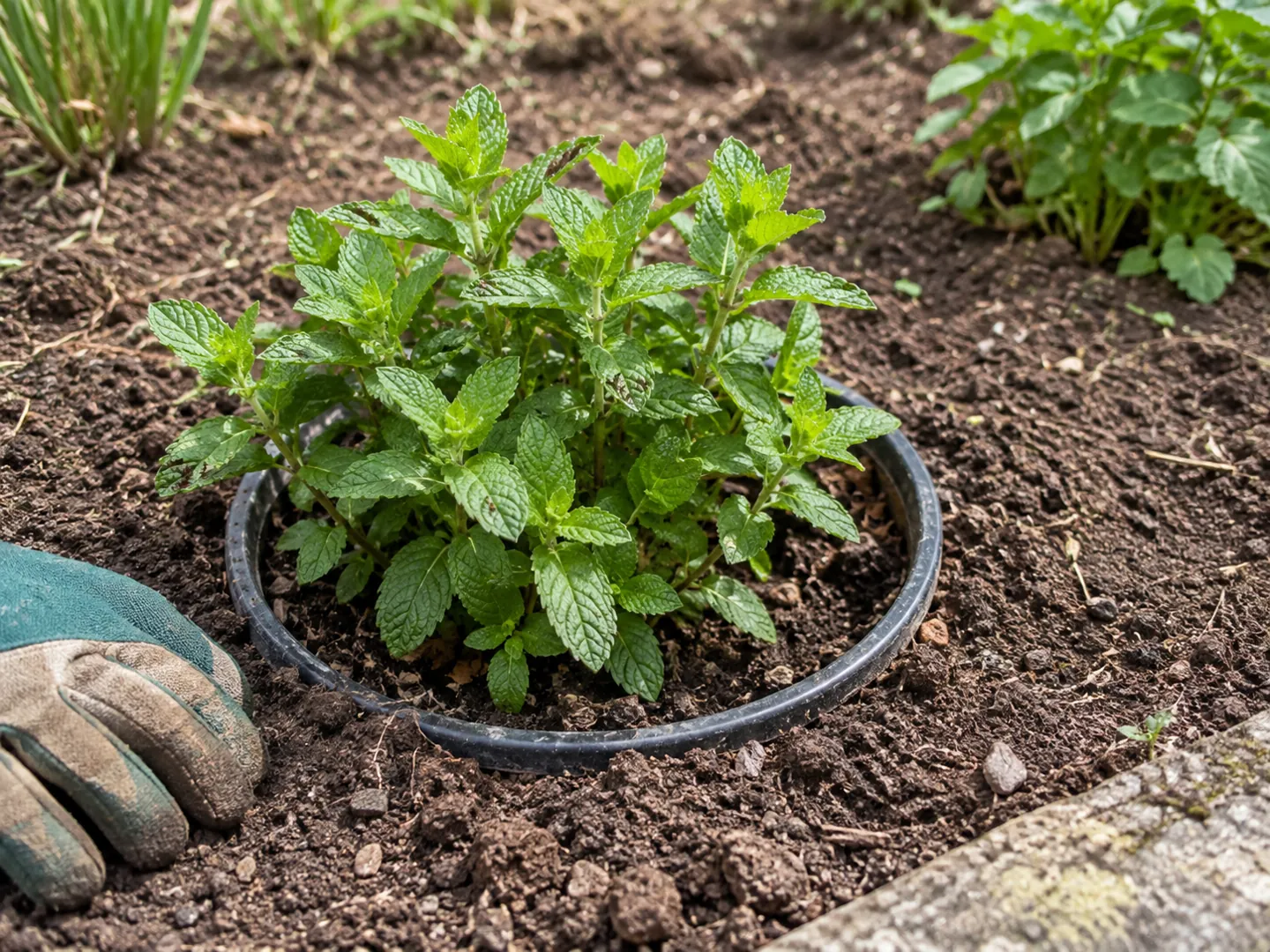
The RHS says many mints are vigorous spreaders, best grown in pots to keep them contained. In a border, sink a bottomless pot with its rim just above the soil.
Check your spot
WHAT THE GARDENERS SAY
KEEP IT IN a pot, not a border
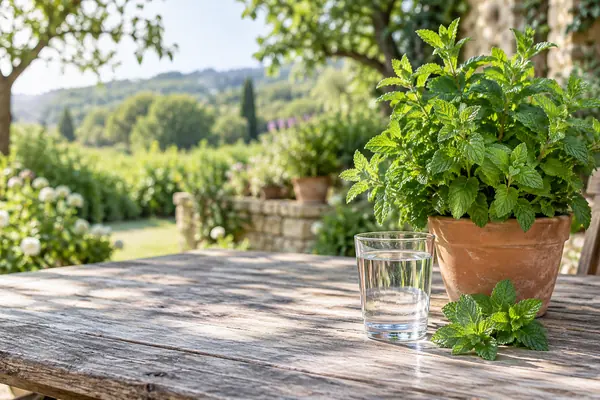
AI-generated image, not a photograph of a real person or place.
Mint is easy to grow and hard to stop.
It creeps underground on rhizomes and can regrow from small pieces left in the soil. The Royal Horticultural Society's advice is simple: grow it in a pot, keep it moist, and keep picking.
THE SHORT ANSWER
Mint asks for little.
The main job is stopping it taking over.
CONTAINING
The RHS says many mints are vigorous spreaders, best grown in pots to keep them contained. In a border, sink a bottomless pot with its rim just above the soil.
Check your spotPICKING
Harvest from late spring to autumn. The RHS says the young, soft shoot tips have the strongest flavour so pick little and often.
How to keep it goingTYPES
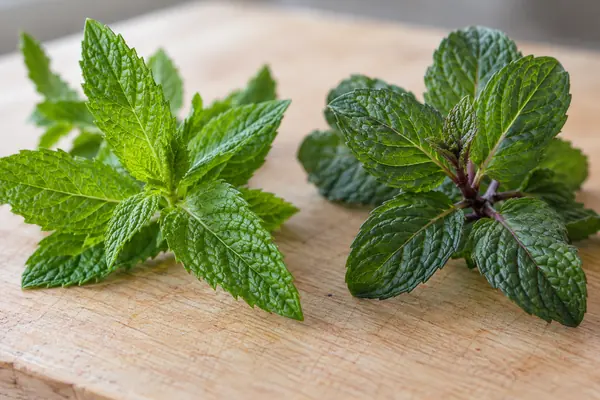
Spearmint oil is mainly carvone. Peppermint, a hybrid of watermint and spearmint, is mainly menthol and menthone, with a cooling aftertaste.
See the numbers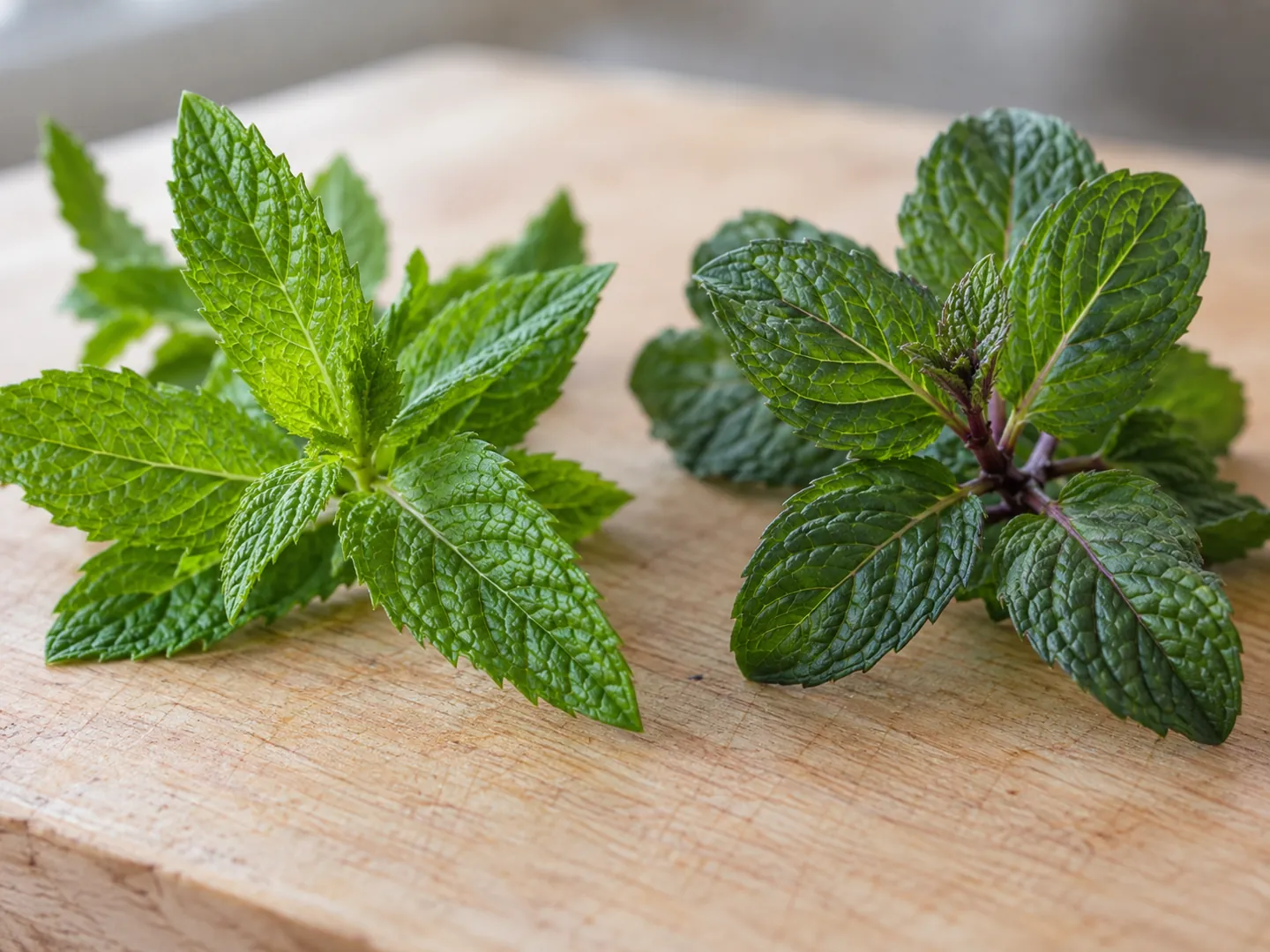
FOUR STEPS FOR A GOOD POT
Young plants can go in at any time of year, but the RHS says they settle best in spring or autumn.
Plant into a container of peat-free multipurpose or soil-based compost so the roots stay put.
Check pots regularly in the growing season, especially in hot, dry weather.
Take the whole plant down to about 5cm from the base and fresh leaves will follow.
Repot into a bigger pot or replant a divided section, in spring or autumn, to keep the plant vigorous.
TWO NUMBERS WORTH KNOWING
One figure on how many mints there are,
one on how low to cut after flowering.
≈ 25 species
Estimated Mentha species
The RHS says there are an estimated 25 species of mint, plus many hybrids and cultivars. Not all are suitable for eating: pennyroyal is listed as harmful if eaten.
SPECIES · RHS
5cm
Height to cut to after flowering
After flowering, the RHS suggests cutting the whole plant down to about 5cm (2in) from the base to encourage a fresh flush of leaves.
CUTTING BACK · RHS
Catmint and Korean mint smell minty but are not true mints. They belong to other plant groups: Nepeta and Agastache.
A QUICK SPOT CHECK
Pick a spot to see what the RHS advice says about it. The bar shows how much effort it takes to keep the mint happy and in its place.
Based on the Royal Horticultural Society's guide to growing mint.
WHY MINT FEELS COLD
Peppermint's oil is mainly menthol, which gives its cooling aftertaste. In 2002, a paper in Nature from David Julius's laboratory described a receptor in sensory nerves that responds both to menthol and to temperatures in the cool to cold range.
That receptor, now called TRPM8, was identified independently by Julius and by Ardem Patapoutian, who both used menthol to find it. The pair shared the 2021 Nobel Prize in Physiology or Medicine for discoveries of receptors for temperature and touch.
In conversation
The RHS says many mints spread vigorously on underground stems called rhizomes, which can regrow from small pieces left in the soil. Growing mint in a pot keeps it contained.
Spearmint (Mentha spicata) has an oil mainly of carvone. Peppermint (Mentha × piperita) is a hybrid of watermint and spearmint, and its oil is mainly menthol and menthone, which gives a cooling aftertaste.
Yes, for winter picking. The RHS suggests bringing potted mint indoors in autumn to a sunny windowsill. Stems also root readily in a jar of water.
Possibly mint rust, a common fungal disease the RHS describes as causing dusty orange, yellow and black spots on leaves.
Menthol activates TRPM8, a receptor in sensory nerves that also responds to cool and cold temperatures. Its discovery was part of the work honoured by the 2021 Nobel Prize in Physiology or Medicine.
Each figure on this page comes from the sources below.
ABOUT THIS NAME
doodlemint.com is part of the DoodleSale portfolio. It isn't in an auction right now, but you can ask about leasing it.